
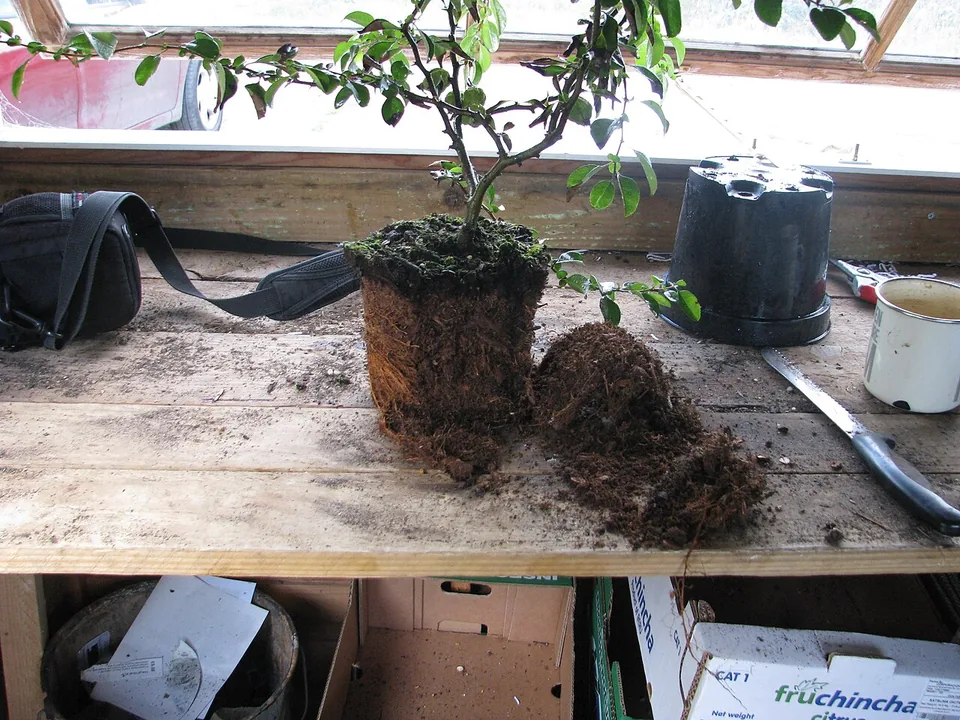
A wilted plant does not automatically need water. Water stress can result from too little moisture or from damaged roots in wet conditions. Start with the pot, then compare the leaves with what you find below them.
Compare these clues before acting
| Check | More consistent with too little water | More consistent with persistently wet conditions |
|---|---|---|
| Potting mix | Dry well below the surface | Damp or wet well below the surface |
| Pot weight | Lighter than this pot after watering | Still heavy long after watering |
| Drainage | No water left in the outer pot | Water collecting around the inner pot |
| Roots, if inspected | May be dry or shriveled | Soft or deteriorating roots are a concern |
These are clues, not a diagnostic test. Root damage, unsuitable light, pests, and temperature stress can overlap. A dry surface with a wet center can also give contradictory signals.
If the root ball is dry
Maryland Extension's drought guidance describes wilting, leaf damage, and leaf loss associated with prolonged dryness. Check whether water actually reaches the root ball. If it runs straight past very dry mix, the plant may still be dry after you water.
Water a conventional draining pot carefully and check moisture again afterward. Let it drain completely. Note the plant's response, but do not expect damaged leaves to repair themselves. A plant that stays limp after moisture is restored needs more investigation.
If the root ball is wet
Stop adding water while you investigate. Check for blocked drainage and water trapped in a decorative container. Clemson Extension explains that root and stem rot can produce wilting; a wet, wilted plant can therefore look thirsty even when more water is the wrong response.
If decline continues, inspect the roots gently. Firm roots and soft, deteriorating roots call for different decisions. Follow our root rot guide if there is substantial root damage. Do not assume that every dark root is rotten or that every wet pot has an infectious disease.
What to record over the next few checks
Keep a short log of moisture below the surface, watering, drainage, and any new leaf changes. Take photos from the same angle. Avoid changing water, light, fertilizer, and pot size together: you would lose track of which change helped.
For continuing problems, the RHS troubleshooting guide recommends considering the whole growing environment. Collect the plant's name, location, recent changes, and root observations before asking for help.
Can an app diagnose overwatering from a photo?
A photo can support observation, but it cannot confirm the moisture history or root condition. Pair any image-based suggestion with these checks. If stems collapse or deterioration spreads quickly, seek help from a local plant clinic or nursery.