
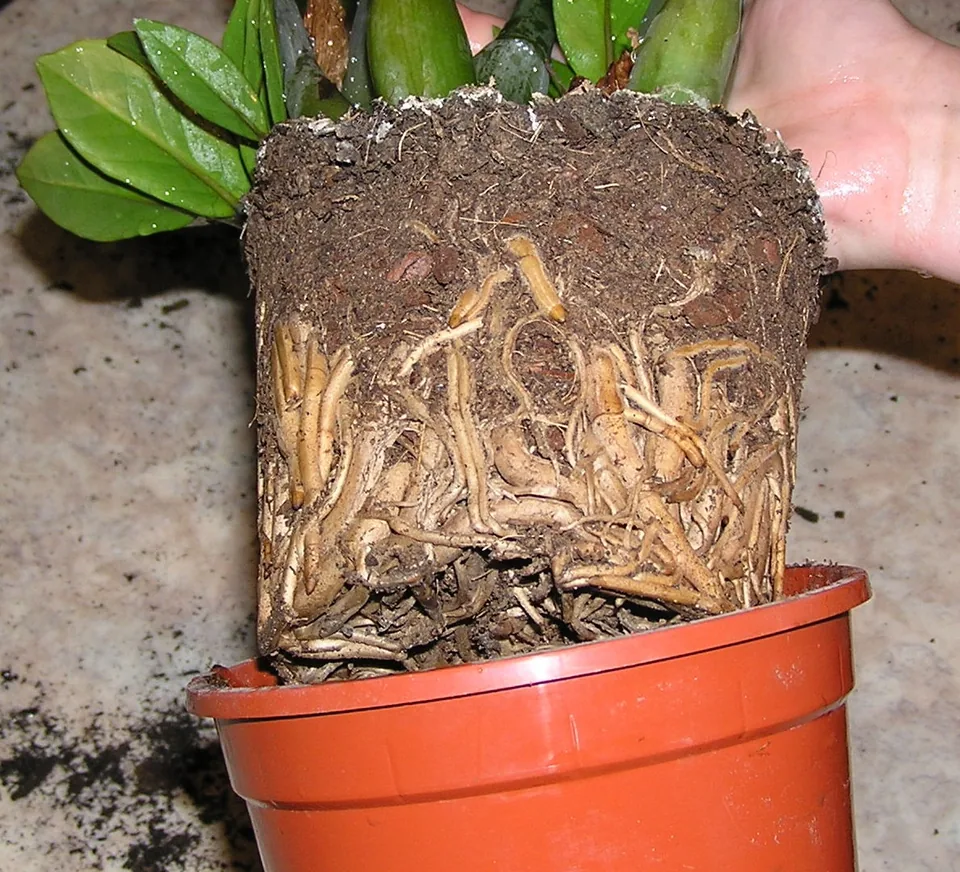
Yellow leaves and drooping growth can be consistent with root rot, but they also occur with drought and other problems. The roots, not a leaf photo, provide the stronger clue. Root-rotting organisms thrive when conditions favor them, and persistently wet potting mix can leave roots vulnerable.
Signs worth checking
- The potting mix remains wet for a long time and the plant keeps declining.
- Lower leaves yellow or drop while the stem base becomes soft or dark.
- Roots are brown or black, soft, and fall apart when handled. Firm roots are a better sign.
A brown root is not automatically diseased; color varies by plant and growing medium. Texture and the overall pattern matter.
What to do
- Gently slide the plant from its pot and inspect the roots and stem base. Work over a clean surface and avoid pulling healthy roots apart.
- If you find soft, rotten portions, remove them with clean tools. Keep any firm, healthy sections.
- Repot the remaining healthy plant in fresh, suitable potting mix and a clean container with drainage. Do not use heavy garden soil in an indoor pot.
- Review the watering routine. Water according to the plant's needs and the moisture in the mix; empty standing water from the saucer.
- Keep a newly affected plant apart from other plants while you assess it, and clean tools and used pots.
Severely damaged plants may not recover. If the roots and stem are mostly soft, a healthy cutting may be a better option for a species that propagates that way. Some cases need a professional diagnosis because different root problems can look similar.
When a photo is not enough
Leaf color alone cannot confirm root rot or identify a pathogen. If the plant is valuable, the damage is widespread, or similar plants are affected, consult a local extension plant clinic before using any pesticide or fungicide. Product labels and local rules vary.