
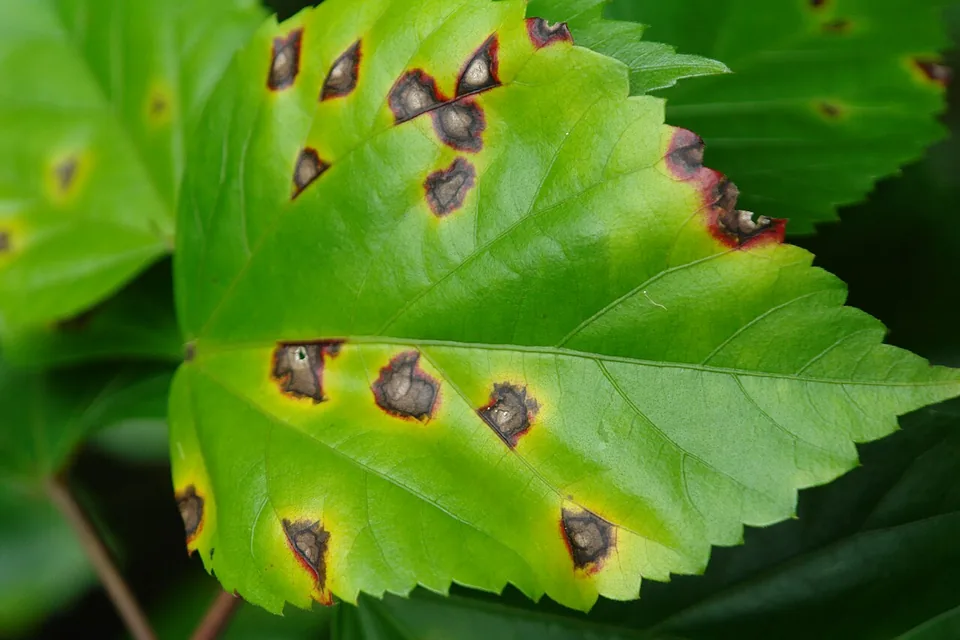
Brown spots are a pattern of damage, not the name of a disease. Water marks, sudden direct sun, pest feeding, and fungal or bacterial problems can all leave spotted leaves. Start by looking for changes that affect where spots appear and whether they are spreading.
Compare the spots and the setting
- Pale or bleached patches after a move into strong light: sun damage is possible.
- Many tiny pale dots, sometimes with fine webbing: inspect undersides for spider mites.
- Distinct spots that keep appearing on new leaves: a leaf disease is one possibility, especially if leaves stay wet and air movement is poor.
- Damage limited to one leaf: check for physical injury or water marks before treating the whole plant.
The pattern can guide inspection, but similar looking spots can have different causes.
A sensible first response
- Photograph the whole plant and both sides of affected leaves. Note when the first spots appeared.
- Check moisture, drainage, direct sun, and whether leaves are staying wet.
- Move a plant with suspected pests or an actively spreading problem away from other plants while you inspect it.
- Remove badly affected leaves with clean tools if they are unlikely to recover; clean the tools afterward.
- Improve air movement and avoid splashing water onto leaves that are prone to spotting.
Do not apply a pesticide or fungicide just because a spot is brown. Confirm the likely problem and follow local product labels if a treatment is actually needed.
When a photo is not enough
A photograph rarely identifies a fungus, bacterium, or other precise cause. If spots spread quickly, affect several plants, or involve stem damage, contact a local extension plant clinic. A sample and care history can be more useful than a close-up image alone.