
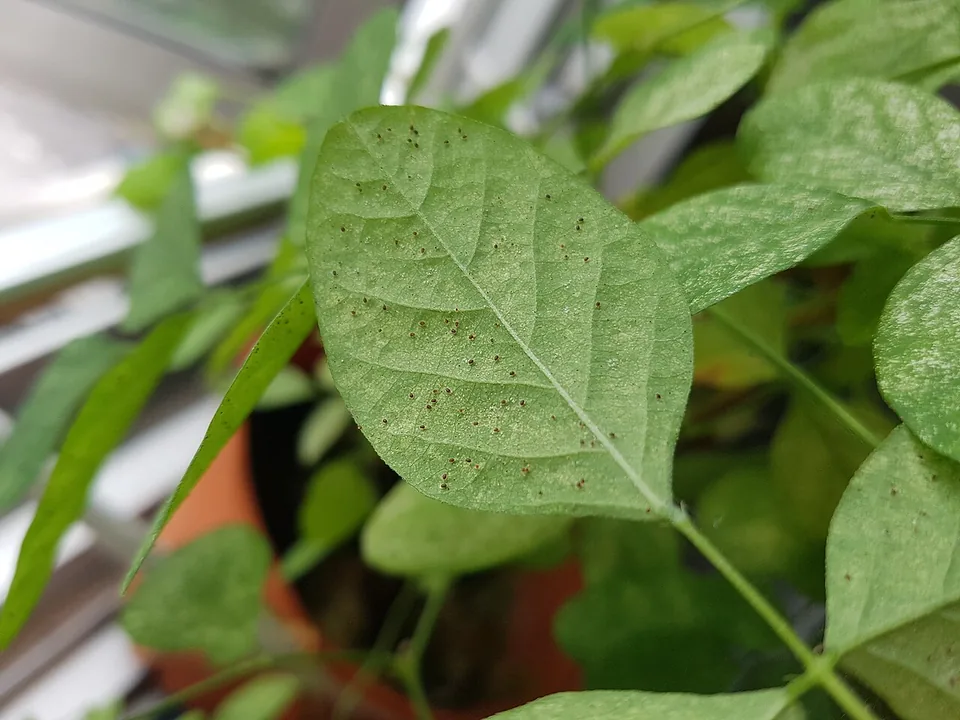
Spider mites can cause many tiny pale dots, called stippling, as they feed on leaves. Fine webbing may appear when numbers build, but its absence does not rule mites out. Other pests and environmental damage can resemble the first signs, so inspect before treating.
How to check
- Look closely at the undersides of affected leaves and along the leaf joints. A hand lens can help with such small pests.
- Compare the finest speckling across several leaves. Note whether new leaves are also affected.
- Check nearby plants, especially if they have similar stippling.
- Record a close photo and a whole-plant photo so you can compare new damage later.
Do not assume every web on a houseplant came from a pest mite. Look for the mites or a consistent pattern of feeding damage.
First steps if you find mites
Move the affected plant away from nearby plants while you work. A gentle rinse, including the leaf undersides, can help reduce mites on plants that tolerate washing. Keep checking because one rinse may not resolve the problem. Avoid soaking foliage that should stay dry.
If mites persist, consult local extension advice and use only a product labeled for the plant and pest in your location. Test any spray on a small area first and follow the label. Plants heavily damaged by pests can be sensitive to sprays.
When a photo is not enough
Tiny mites can be missed in a phone photo, and stippling has other possible causes. Use direct inspection, ideally with magnification. If the infestation is heavy or the plant is valuable, ask a local plant clinic or nursery for help identifying the pest before applying a product.