
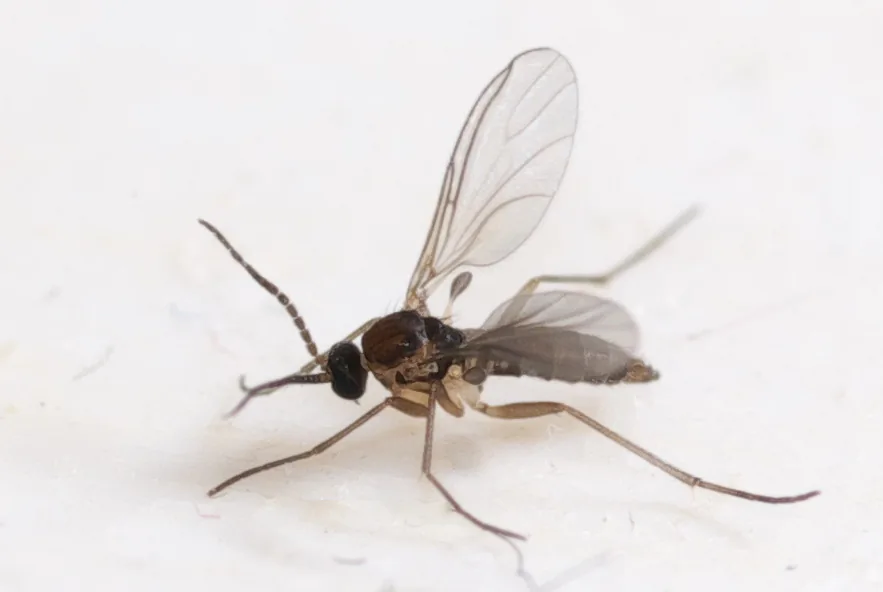
Small flies near a plant pot may be fungus gnats. The useful first step is to find their breeding site, then address the conditions there. Spraying every leaf or watering with a household mixture is not a reliable substitute for identifying the insect.
Are these fungus gnats or another small fly?
Fungus gnats are slender, dark flies often found near moist potting mix. Watch whether they emerge when you disturb a pot. Flies around fruit, bins, or drains may have another source; proximity to a plant does not establish an identification.
University of Maryland Extension recommends finding the source and using yellow sticky traps to monitor flying insects. Place a trap near the affected pot according to its instructions, out of reach of children and pets. Record which pots have activity before treating your whole collection.
Why they keep coming back
Colorado State University Extension describes a life cycle that includes larvae in moist growing media. Adults you can see are only part of the problem. A trap can help track adults while larvae remain in the pot.
Inspect the watering setup: an inner pot standing in water, slow-drying mix, or repeated watering before the plant needs it can keep conditions suitable. Remove decaying plant debris and check nearby pots rather than assuming the first visible fly came from the nearest plant.
A practical control sequence
- Monitor the likely source. Check traps and pot activity regularly. Keep notes so you can compare observations.
- Correct excess moisture. Let the mix dry to the level appropriate for the plant. Do not severely dry a moisture-loving plant just to control insects. Empty saucers and check drainage.
- Address larvae if needed. Maryland Extension identifies products containing Bacillus thuringiensis subsp. israelensis (Bti) that are labeled for fungus gnat larvae in indoor plant soil. Use only a product authorized for that use where you live, and follow its label for application and repeat treatments.
- Keep checking. A lower trap count is helpful, but one quiet day does not show that the breeding site is gone.
Read our watering guide if the pot stays wet between checks.
Will fungus gnats kill my plant?
Minnesota Extension describes fungus gnats as largely a nuisance, with larvae feeding in growing media. Vulnerable plants and heavy infestations warrant attention. If a mature plant is also yellowing or collapsing, inspect its care and roots rather than attributing all damage to flies.
What to avoid
Do not invent pesticide doses or mix cleaners into potting soil. A photograph of a fly may help narrow the possibilities, but it cannot reveal larvae or prove where they are breeding. If identification remains uncertain, bring a clear close-up and your observations to a local extension service or plant specialist.