
Finding a tiny mushroom beside your houseplant does not mean the plant has a fungal disease. Fungi can grow on organic material in potting mix. The more useful question is whether the plant's roots are healthy and the mix is staying damp longer than that plant needs.
What is growing in the pot?
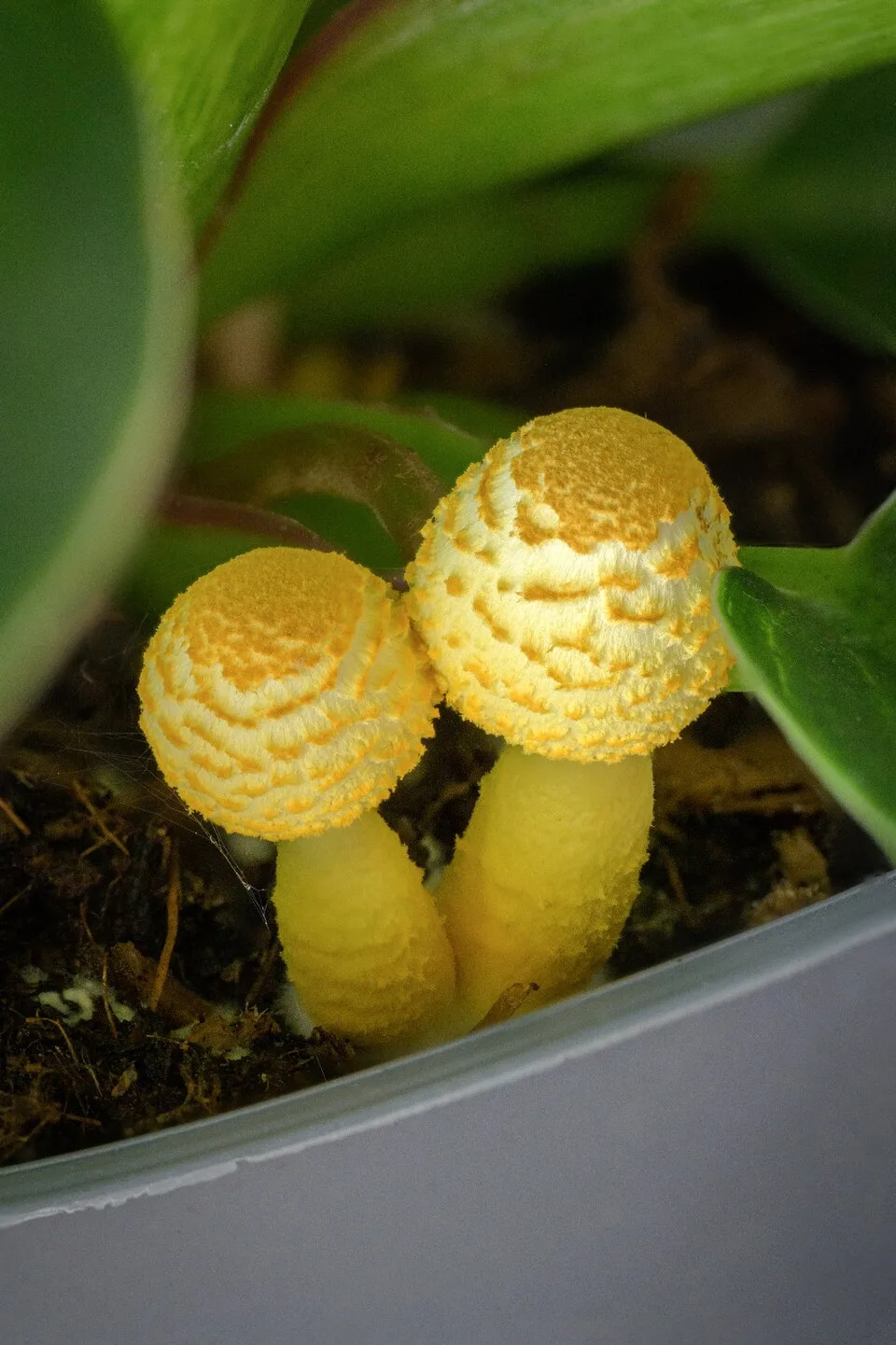
The bright yellow Leucocoprinus birnbaumii, often called flower pot parasol, is one mushroom that can appear in houseplant soil. Penn State Extension explains that it feeds on decaying organic matter in potting mix and does not harm a healthy houseplant. The photo on this page shows that species, but other mushrooms may look similar. Do not identify or eat a mushroom from a photograph.
White or grayish material lying across the surface may be fungal growth rather than a mushroom. Greenish growth may be algae. Maryland Extension notes that surface fungi and algae usually do not injure the plant, although a thick mat can interfere with water entering the mix. A dry, hard white crust around the pot rim can instead be mineral salts; look at its texture and location before calling it mold.
Should you remove it?
If children or pets can reach the pot, remove mushrooms promptly and keep the pot out of reach. Penn State warns that the yellow flower pot parasol is toxic if eaten. Treat any unidentified mushroom as inedible. Avoid disturbing large patches of fungal growth if someone nearby is sensitive to airborne spores; seek local advice if that is a concern.
For a small surface patch, Maryland Extension advises breaking up a mat or removing the affected upper layer of mix. Throw removed material away and wash your hands. The fungus can return if the conditions that support it remain.
Check why the mix stays damp
Look at the pot's drainage hole, decorative outer pot, saucer, and how far the mix has dried below the surface. Empty standing water. Give plants enough spacing for air to circulate, and water according to the species and actual moisture level. A mushroom does not prove overwatering on its own; some plants need more consistently moist mix than others.
Our watering guide explains how to use pot weight and moisture checks. If small dark flies also appear around the pot, the fungus gnat guide covers a different problem associated with moist growing media.
When to investigate the plant itself
Wilting while the mix is persistently wet, yellowing across many leaves, or soft dark roots calls for a root check. Maryland Extension's diagnostic guide describes root rot signs and advises examining roots rather than diagnosing from foliage alone. See our root rot guide for the first checks.
Skip household antifungal mixtures and automatic pesticide use. A surface mushroom can often be managed by removing it and correcting the pot's growing conditions. A photo cannot show what is happening inside the root ball or confirm that a different mushroom is safe.