
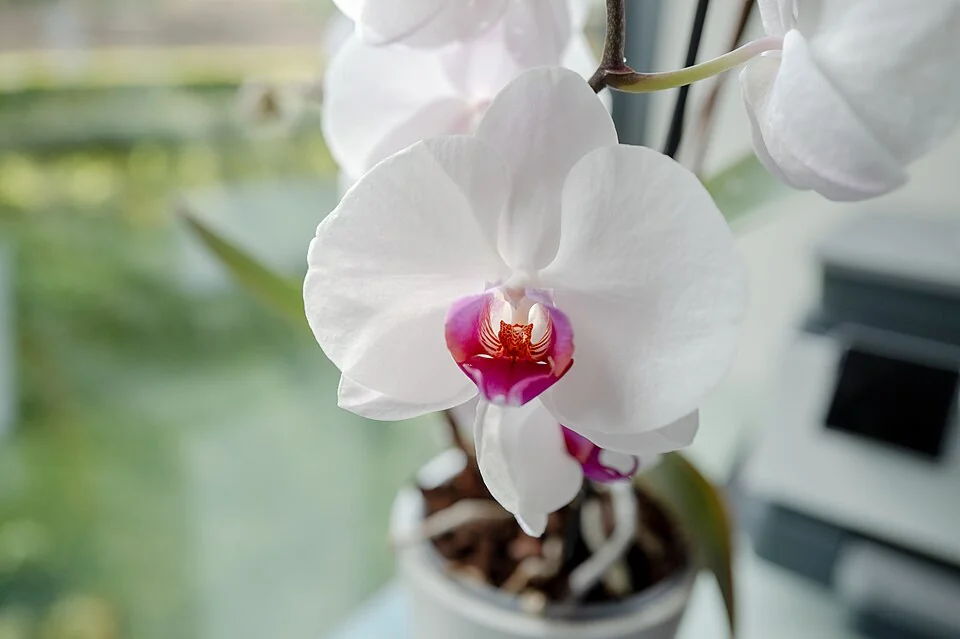
The flowers fall, the leaves stay green, and months pass without another spike. For a moth orchid (Phalaenopsis), this can be normal between flowering cycles. The photograph shows a flowering moth orchid as a species example; its appearance cannot tell you why another plant has not rebloomed. Other orchid genera have different care needs, so identify yours first.
Is the orchid getting enough light?
Maryland Extension calls low light the most common reason a Phalaenopsis fails to flower again. It recommends indirect light from an east or west window, or a suitable grow light. Dark, very stiff leaves can point toward too little light, though leaf color alone is not a measurement.
Move a healthy plant toward brighter filtered light in stages. Strong direct sun may yellow or scorch the foliage. The RHS also recommends bright light without harsh sun. Watch new growth over weeks rather than expecting an immediate flower spike after a move.
Are the roots and potting mix healthy?
Check a clear pot for firm roots and inspect the bark-based orchid mix. Moth orchids are not grown like plants in ordinary potting soil. The RHS growing guide recommends orchid compost, drainage, and repotting when the mix has aged or the plant has outgrown its container. Soggy, decaying mix can damage roots; a plant with unhealthy roots is unlikely to flower well.
Water according to the condition of the mix and roots, allowing excess to drain. Avoid leaving the pot standing in water. If leaves are wrinkled, check roots before simply watering more: damaged roots may be unable to take up moisture. See the root rot guide for what to examine.
Should you cool it or feed it to make flowers?
Once the plant is healthy and receiving enough light, a modest period of cooler nights can encourage a flower spike. The RHS describes moving a large, healthy plant to a slightly cooler spot for a limited period. Keep it within the species' safe temperature range and away from cold drafts; do not put a tropical orchid outdoors in cold weather.
Feed lightly during active growth with an orchid fertilizer according to its label. More fertilizer is not a shortcut to flowers: Maryland Extension notes that overfeeding can favor leaves instead. A photo cannot measure light exposure, reveal the roots inside a pot, or predict when a particular orchid will bloom.