
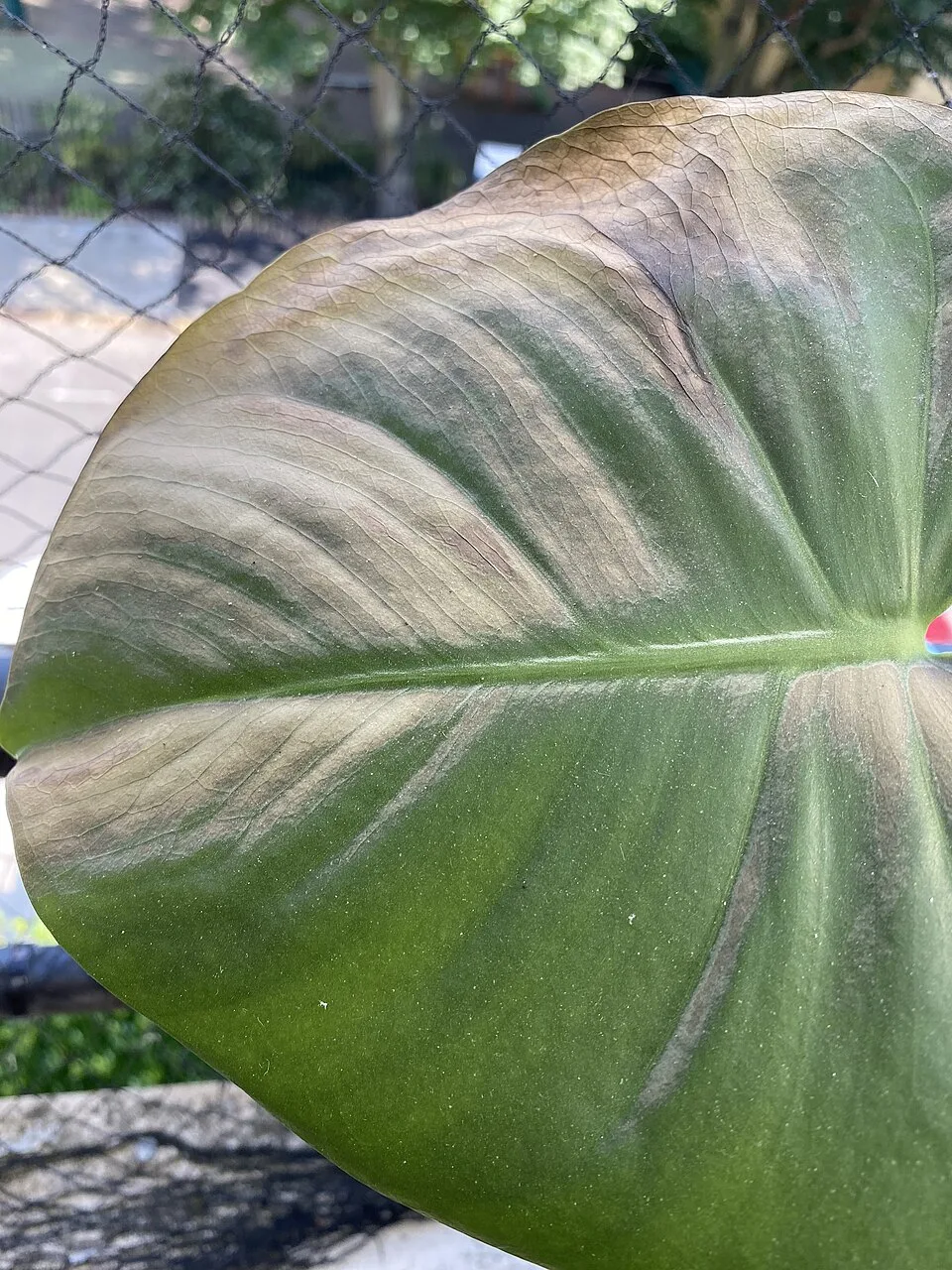
Yes. A houseplant adapted to gentle indoor light can scorch when placed abruptly in strong sun, including after a move outdoors. The pictured Monstera leaf developed pale, dry areas after outdoor sun exposure. Other damage can look similar, so combine the appearance with the plant's recent light history.
What does sun scorch look like?
Maryland Extension describes pale, bleached, or faded leaf areas that may later turn brown and brittle. The exposed side of the plant can be more affected. Strong sun combined with dry potting mix can make the damage worse.
Ask when the marks appeared. Did the plant move closer to a bright window, from a sheltered window to a sunny balcony, or under a stronger grow light? A sudden change makes sun scorch more plausible than a mark that slowly spreads through shaded leaves. Wet, soft spots or damage appearing on many plants under the same care may need different investigation; see our leaf spot guide.
What should you do now?
Move the plant to light suited to its species, out of the harshest direct sun while it recovers. Check moisture without automatically flooding a stressed pot. The pale or brown tissue is damaged; judge recovery by the next leaves rather than expecting the old patches to turn green.
If you want the plant outdoors, acclimate it in stages. Minnesota Extension warns that houseplants moved straight into direct sunlight often burn. Begin in a sheltered, shaded position and increase exposure gradually only if the species tolerates it. A sun-loving succulent and a shade-tolerant tropical plant need different final locations.
Should you cut off the burnt leaf?
If much of a leaf remains green, you can leave it while new growth develops. Remove dry, fully dead tissue for appearance if desired, using clean scissors. Avoid stripping many leaves from a plant already stressed by the move.
A photograph of a pale patch cannot prove sunburn. Location, timing, texture, and whether new marks continue after the light changes are better evidence. If the damage keeps spreading in stable light, check pests, roots, and moisture before making another move.