
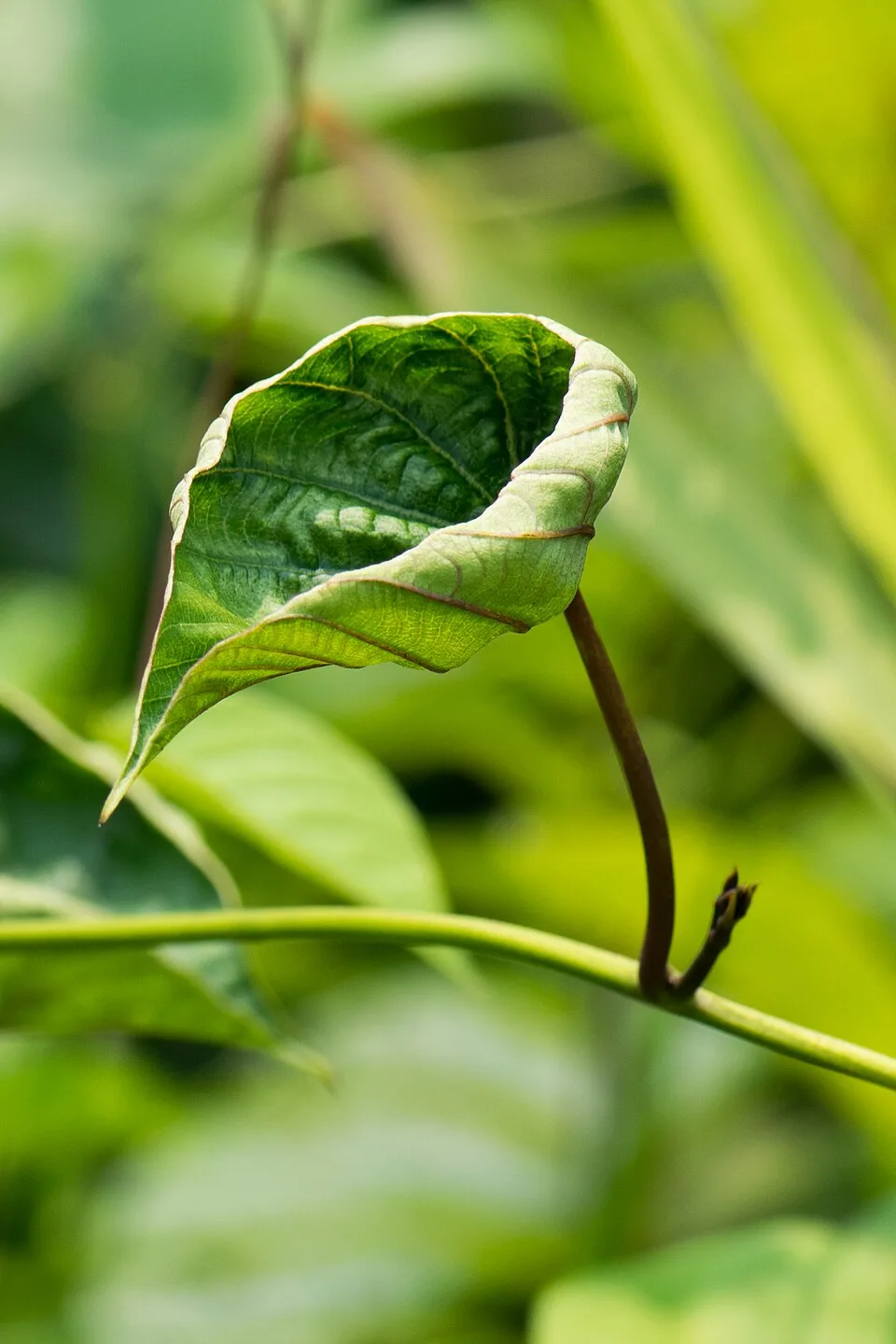
A leaf curling inward can look like a request for water. Sometimes it is, but the same shape can appear after heat exposure or on growth damaged by pests. Start with what changed recently and whether the curl is confined to old leaves, new leaves, or one side of the plant.
First, check the pot rather than the calendar
Feel below the surface of the mix and lift the pot to compare its weight with a freshly watered pot. Maryland Extension notes that leaves can curl when roots cannot supply enough water. A mix that has become very dry may pull away from the container wall, causing water to run straight through; rewet it gradually and let excess drain.
Wet mix calls for a different investigation. Check that the inner pot has a drainage hole and is not sitting in water. A wet pot with declining foliage may have damaged roots, so do not keep adding water just because the leaves look stressed. Our too wet or too dry guide walks through the root and moisture checks.
Look at the room and the leaf pattern
Did the plant move into strong sun, beside a heater, or against cold glass? Maryland Extension's indoor climate guidance advises protecting houseplants from sudden temperature changes and heating or cooling drafts. Check whether the worst leaves face a window or vent. Move a stressed plant to a suitable, steadier location; avoid making several changes at once.
A leaf that unfurls with an unusual shape is different from an older leaf curling after a dry spell. Examine new growth closely and compare it with older, healthy leaves of the same plant. Some species naturally have wavy or rolled foliage, so a single photograph without a healthy comparison may mislead.
Inspect new growth for pests
Use good light and look under leaves, along stems, and where leaves emerge. Maryland Extension's diagnostic guide lists aphids among possible causes of stunted, twisted new growth. It also describes tiny mites and other insects that may be hard to spot without a close look. Isolate a plant with visible pests while you identify them; choose any treatment only after checking the pest and the product's label for indoor use.
If you see fine stippling or webbing, use our spider mite guide. Do not assume every curled leaf has an insect: healthy leaves can deform for other reasons, and treating a pest you cannot find can delay a useful care change.
What to do over the next few days
- Note which leaves curl and whether new leaves are affected.
- Check moisture below the surface, drainage, and whether the pot stands in water.
- Look for a recent move, strong sun, a heat source, or a cold draft.
- Inspect leaf undersides and new growth with a phone light or magnifier.
- Make the most likely care correction, then watch new growth for improvement. A damaged old leaf may not flatten again.
Maryland Extension recommends watering when the plant needs it, rather than following a fixed calendar. If several plants decline quickly, new leaves remain badly distorted, or the roots look damaged, ask a local extension plant clinic to examine a sample. A photo of a curled leaf alone cannot establish the cause.