
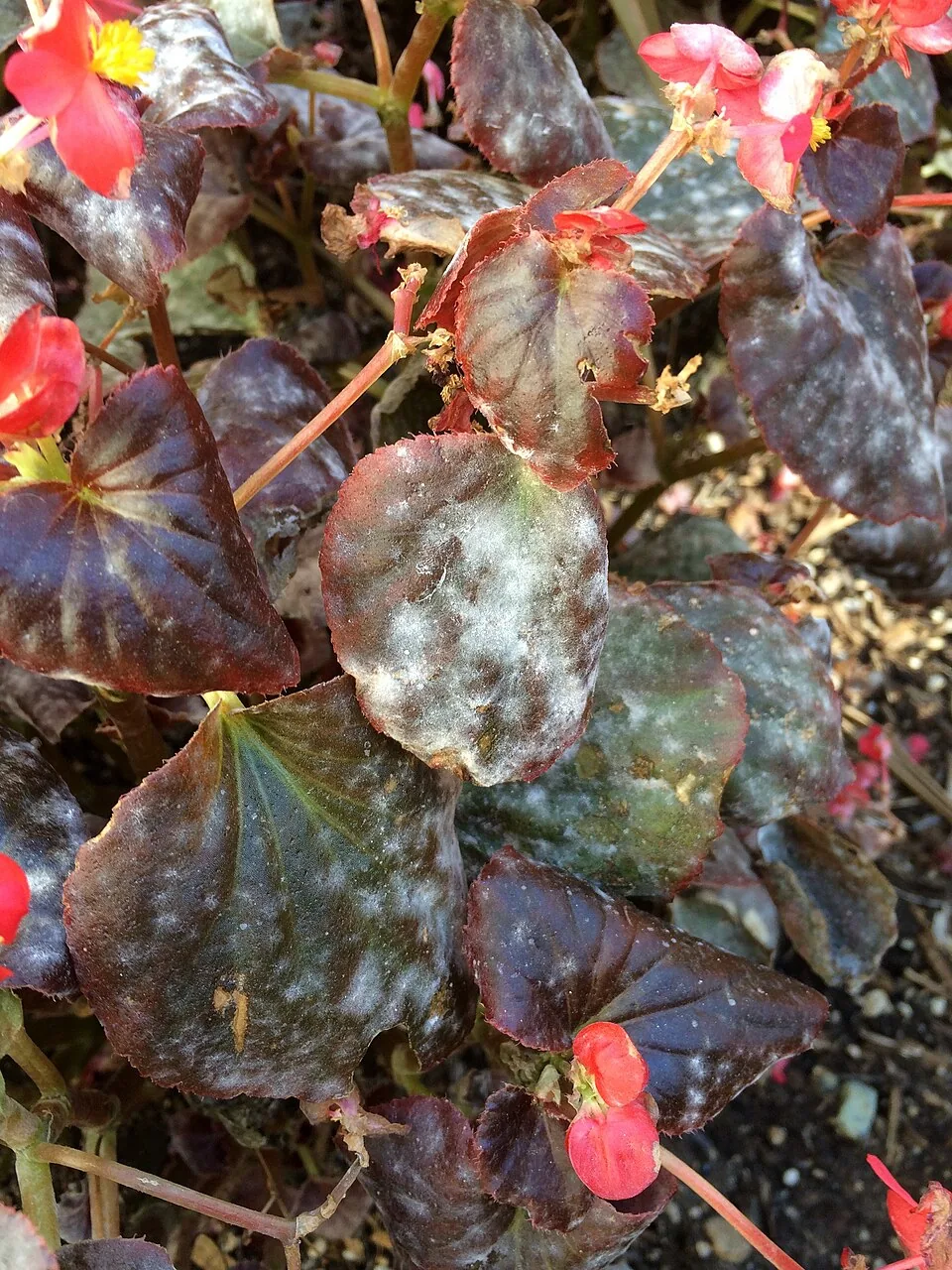
A white mark on a leaf is a reason to inspect, not a reason to spray. Powdery mildew is one possible cause. Dried water deposits, dust, and white wax from pests can also look pale in a photo. Notice whether the mark is spreading, where it appears, and whether there are insects nearby.
What does powdery mildew look like?
The RHS powdery mildew guide describes white, dusty fungal growth in patches on upper or lower leaf surfaces and sometimes on stems or flowers. Affected young growth may become distorted. The appearance varies by host plant, so a matching internet photo is not a definitive diagnosis.
Compare several leaves in good light. Does the coating form new patches over days? Does it seem to sit on the leaf rather than follow its natural color pattern? Check the undersides too. The RHS houseplant health guide includes a white dusting among signs that can suggest powdery mildew indoors.
Could the white material be something else?
Look closely at leaf joints and stems for separate, cottony bodies. Those point toward mealybugs, which need a different response. Mineral residue may appear after water dries on a leaf; dust may collect evenly in sheltered areas. Do not identify any of these from color alone. If you are unsure, photograph the same marked leaf now and again after several days, and ask a local plant clinic to examine a sample.
What can you change safely?
- Set the plant apart while you inspect it. This makes it easier to monitor new marks and check neighboring plants.
- Remove badly affected or fallen material where practical. Clean cutting tools, and avoid spreading material to other plants.
- Improve air movement without stressing the plant. Do not crowd foliage against other plants or a wall. Match the light to the species rather than putting a shade plant in harsh sun.
- Review watering. Water according to the plant and its potting mix; avoid keeping foliage wet for long periods. University of Minnesota Extension advises watering begonias at the base when possible and allowing good air circulation to help limit leaf disease.
- Watch new growth. Make a note of whether patches continue to appear after conditions improve.
The RHS favors cultural changes first and cautions against untested homemade fungicide mixtures. If you consider a product, use only one labeled for that plant, disease, and indoor setting in your location; follow its directions. Do not assume that spraying can restore tissue already damaged.
Can a photo confirm powdery mildew?
No. It can document the pattern and help you compare changes, but similar-looking white marks have different causes. A plant clinic may need to inspect a sample when the pattern is unclear, spreads quickly, or affects several plants.