
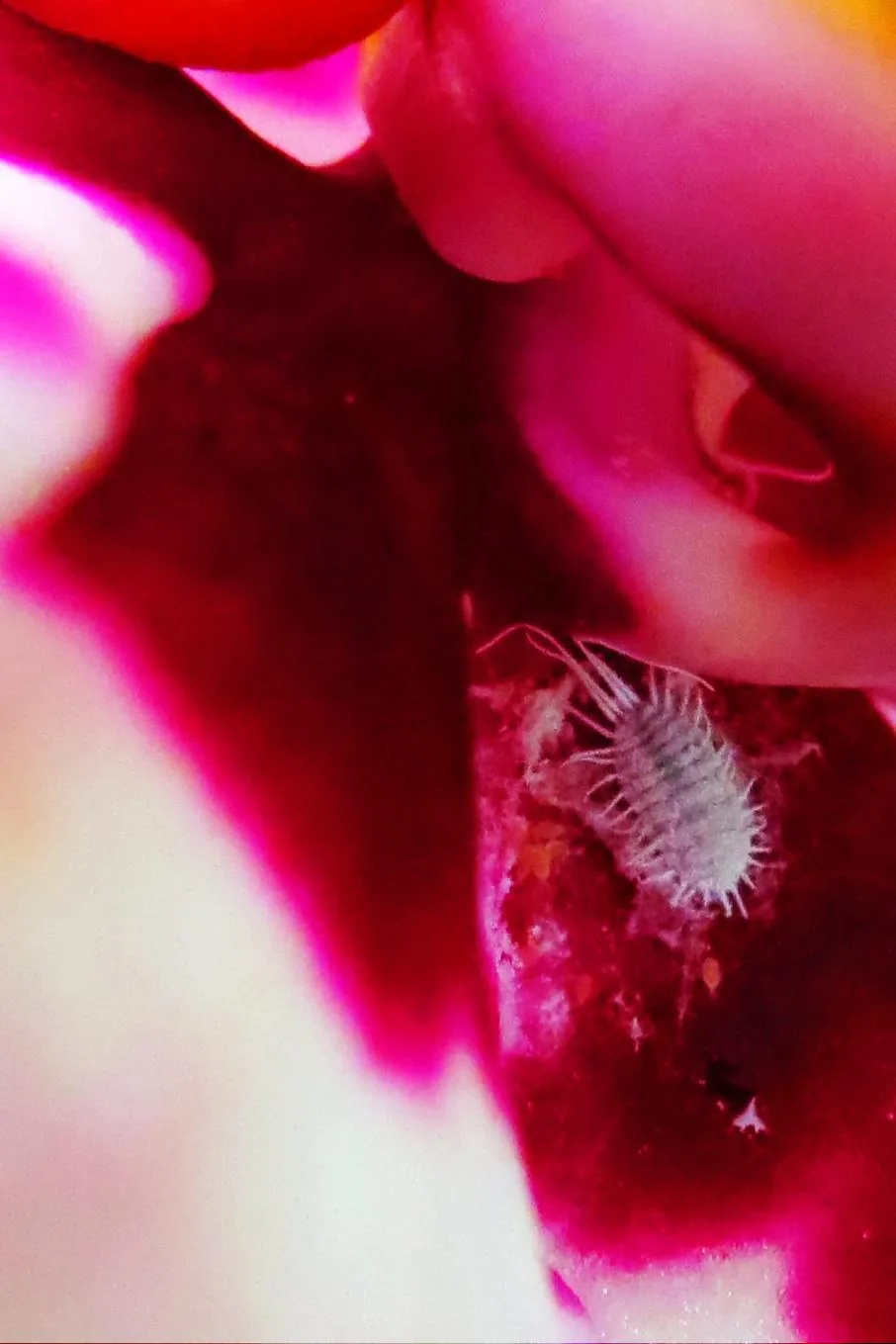
If you see small white, cottony patches where leaves join a stem, take a closer look before treating the plant. Mealybugs are one possibility, but a white mark alone is not an identification. The insect, its waxy covering, and the places it hides are more useful clues.
What do mealybugs look like?
University of Maryland Extension describes soft-bodied insects covered in powdery white wax, often with waxy filaments around their edges. They may sit or crawl slowly on leaf undersides, stems, flowers, and even the outside of the pot. Cottony wax is often the first thing a plant owner notices.
Use a hand lens or phone close-up to look for individual insects beneath the white coating. Inspect leaf axils, new growth, undersides, and crevices. The RHS also notes that some species feed on roots, where a leaf photo will not show them. If the white material is a flat dusting spread across the leaf surface, compare it with our powdery mildew guide before choosing a pest treatment.
Are the insects damaging the plant?
Mealybugs feed on plant sap. A larger or persistent population can be associated with yellowing, stunting, or leaf drop. Some produce sticky honeydew, which can support dark sooty growth. These symptoms are not unique to mealybugs: check watering and other recent changes too.
Finding a few insects early gives you a clearer starting point than waiting for leaves to decline. Check nearby plants as well, especially those that touched the affected foliage.
What should you do first?
- Separate the plant. Move it away from other houseplants while you inspect and manage it. Take care not to spread insects on your hands or tools.
- Remove visible insects. For a light infestation, Maryland Extension suggests dabbing individual mealybugs with a cotton swab dipped in household alcohol. Keep alcohol off the leaf surface, which it can damage, and test the plant's tolerance first.
- Recheck hidden places. Repeat inspections of leaf joints, undersides, stems, and neighboring plants when you water. One clean-looking day is not proof the infestation is gone.
- Escalate only if needed. For a heavy infestation, Maryland Extension describes insecticidal soap labeled for indoor plants or another registered houseplant product. Read the exact label for the plant, pest, indoor location, application, and repeat interval. Heavily infested plants can be difficult to save.
Avoid pouring alcohol or homemade mixtures into the soil. A treatment that contacts one insect does not necessarily reach those hidden in leaf joints or roots.
When should you ask for help?
If insects keep returning, you cannot find the source, or a valuable plant is rapidly declining, take clear close-ups and a sample to a local extension plant clinic or reputable plant specialist. A photo can help narrow the possibilities, but it cannot establish a root infestation or measure how far damage has progressed.