
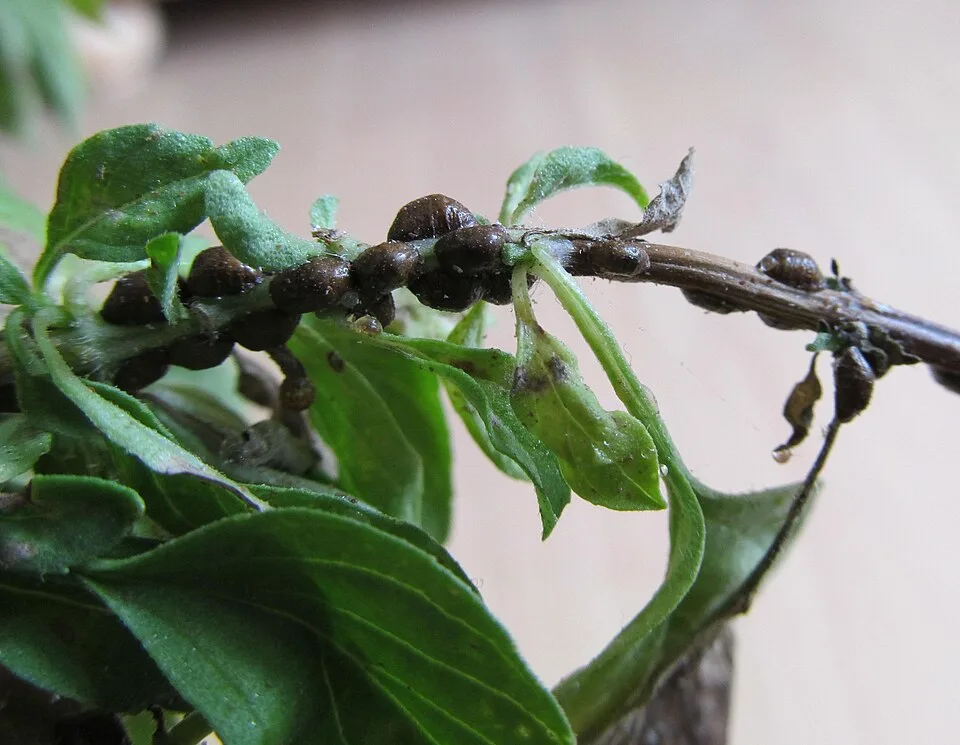
Scale insects can resemble small, fixed bumps on a stem or leaf. In the photograph, dark scales cluster on Thai basil; species and colors vary. Because a normal scar or a piece of potting mix can also look like a bump, inspect the plant closely before choosing a treatment.
Where should you look?
Check along stems, leaf veins, petioles, and the undersides of leaves. Maryland Extension notes that scales may hide in sheaths and crevices near emerging leaves. A magnifier helps. Some scales produce sticky honeydew on leaves or the surface under the pot; armored scales do not, so a clean table is not an all-clear.
Notice whether the bumps are concentrated in one area or spread across the plant. Yellowing or premature leaf loss can accompany a substantial infestation, but those symptoms also have other causes. Photograph the same marked stem over several days so you can check whether new bumps appear.
Start with a small infestation
Separate the plant from its neighbors and check nearby pots. Minnesota Extension's indoor pest guide suggests carefully removing small numbers of scale insects and pruning a heavily infested branch where appropriate. Avoid scraping so hard that you damage the stem. Wipe honeydew from surfaces and continue inspecting new growth.
Insects beneath protective coverings can be difficult to control in one pass. If there are many scales across the plant, the cost and effort of repeated treatment may outweigh keeping it, especially beside healthy plants.
When a spray makes sense
If physical removal is not enough, use only a product labeled for indoor plants and the type of scale involved; follow its timing and safety instructions. Maryland Extension emphasizes that indoor treatment choices are limited. Do not assume a general household cleaner or homemade mixture is safe for foliage.
Soft, white cottony clusters may be mealybugs, while moving pear-shaped insects may be aphids. A photograph may narrow the possibilities, but close examination of the organism and repeated checks show whether the infestation is active.