
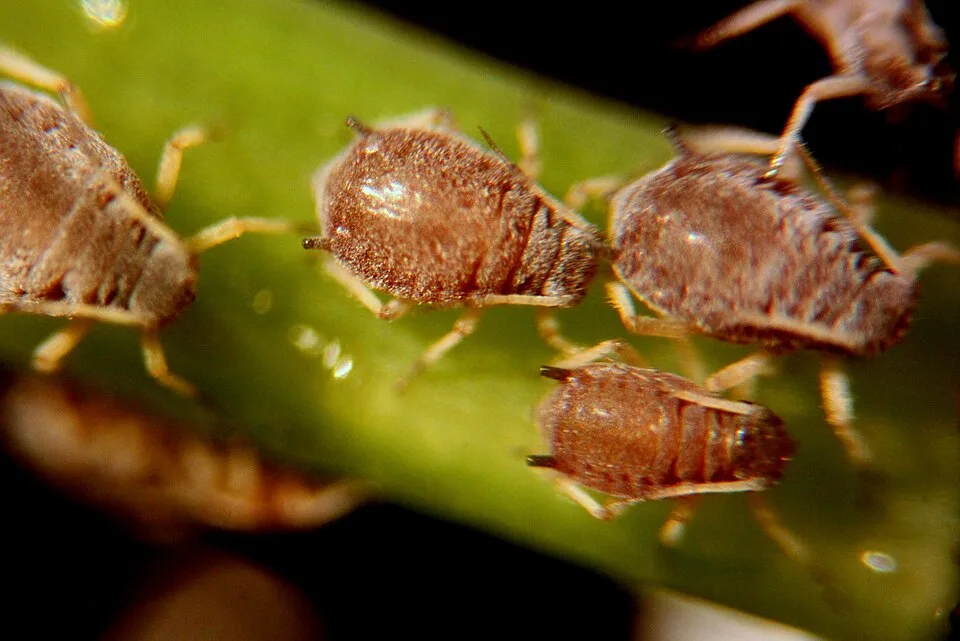
Aphids are small, soft-bodied insects that often gather on tender stems, new leaves, and flower buds. The close-up above shows aphids on an indoor rubber plant. They can be green, brown, or other colors, so their shape and where they gather matter more than one color.
Check the new growth
Look at leaf undersides, the stem just below a bud, and any curled new leaf. Minnesota Extension describes aphids as pear-shaped with visible legs and antennae. You may also find pale shed skins and shiny, sticky honeydew on foliage or a nearby surface.
Maryland Extension explains that aphid feeding can distort young leaves while they expand. Once deformed, an old leaf may stay that way even after the insects are removed. Track fresh leaves instead of waiting for damaged ones to straighten.
Manage a small colony
Isolate the plant while you check the rest of your collection. Remove small clusters by hand or rinse them from sturdy foliage with a controlled stream of plain water. Support delicate leaves and keep excess water out of furniture and electrical outlets. Repeat your inspection over the following days, especially where new leaves emerge.
Prune an infested tip only if that is suitable for the species and will not remove most of the plant. Wipe sticky residue after reducing the insects. If the colony returns or is widespread, reassess the identification and consider a product specifically labeled for indoor use on that plant. Follow the label; homemade dish soap can burn foliage.
Could it be another pest?
Hard, attached bumps suggest scale insects. White cottony clusters may be mealybugs. A curled leaf alone can also reflect water or temperature stress; use the curling leaves guide if no insects are visible. A photo of damage cannot prove aphids remain on the plant today.