
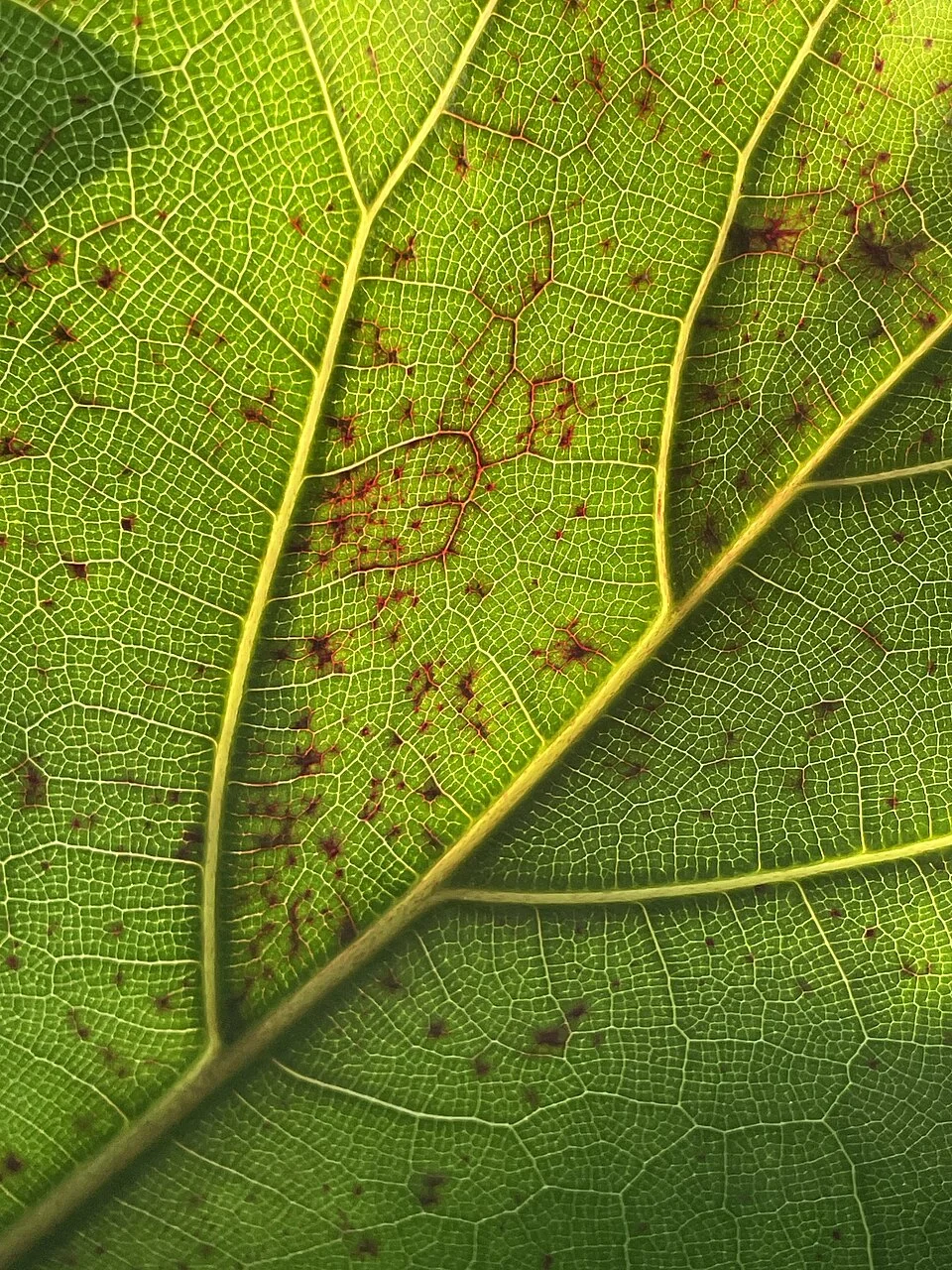
Small raised marks on a leaf can look like a pest, a disease, or damage caused by growing conditions. The photograph shows edema on a fiddle-leaf fig leaf. Use it as an example of leaf tissue damage, then check the texture and distribution of marks on your own plant before acting.
What does edema look like?
Maryland Extension describes wart-like or crusty bumps, often on leaf undersides. They may begin as blisters and turn brown or corky. Edema happens when roots take up water faster than leaves release it; it is a physiological disorder, not an insect infestation. Susceptibility varies by plant, season, light, temperature, and moisture.
Look at several leaves with a hand lens. Are the bumps embedded in the leaf tissue, or do they look attached to the surface? Note whether the marks appeared after the pot stayed wet during cooler or dimmer weather. That history can support edema, but a close-up photo alone cannot confirm it.
Could the bumps be scale insects instead?
Scale insects often sit along veins and stems as distinct attached bumps. Some may leave sticky honeydew. Maryland Extension's scale guide shows how their shape and location differ from damaged tissue. Inspect stems and leaf undersides, and use a magnifier before trying to lift an uncertain mark; scraping healthy tissue can injure the leaf.
If marks are flat, spreading, or surrounded by yellow or water-soaked tissue, consider our leaf spot guide. A rapid change affecting several leaves may warrant a sample diagnosis from a local extension plant clinic.
What helps if it is edema?
Check the potting mix below the surface and make sure excess water can leave the pot. Let the mix dry to the level appropriate for the species before watering again. Improve air movement and avoid leaving the plant in a dim, persistently damp spot. The RHS recommends adjusting watering and drainage rather than stripping off affected leaves.
Existing corky marks will not turn back into green tissue. Watch new leaves after conditions change. Do not use an insecticide just because a raised spot resembles a bug; identify the cause first.