
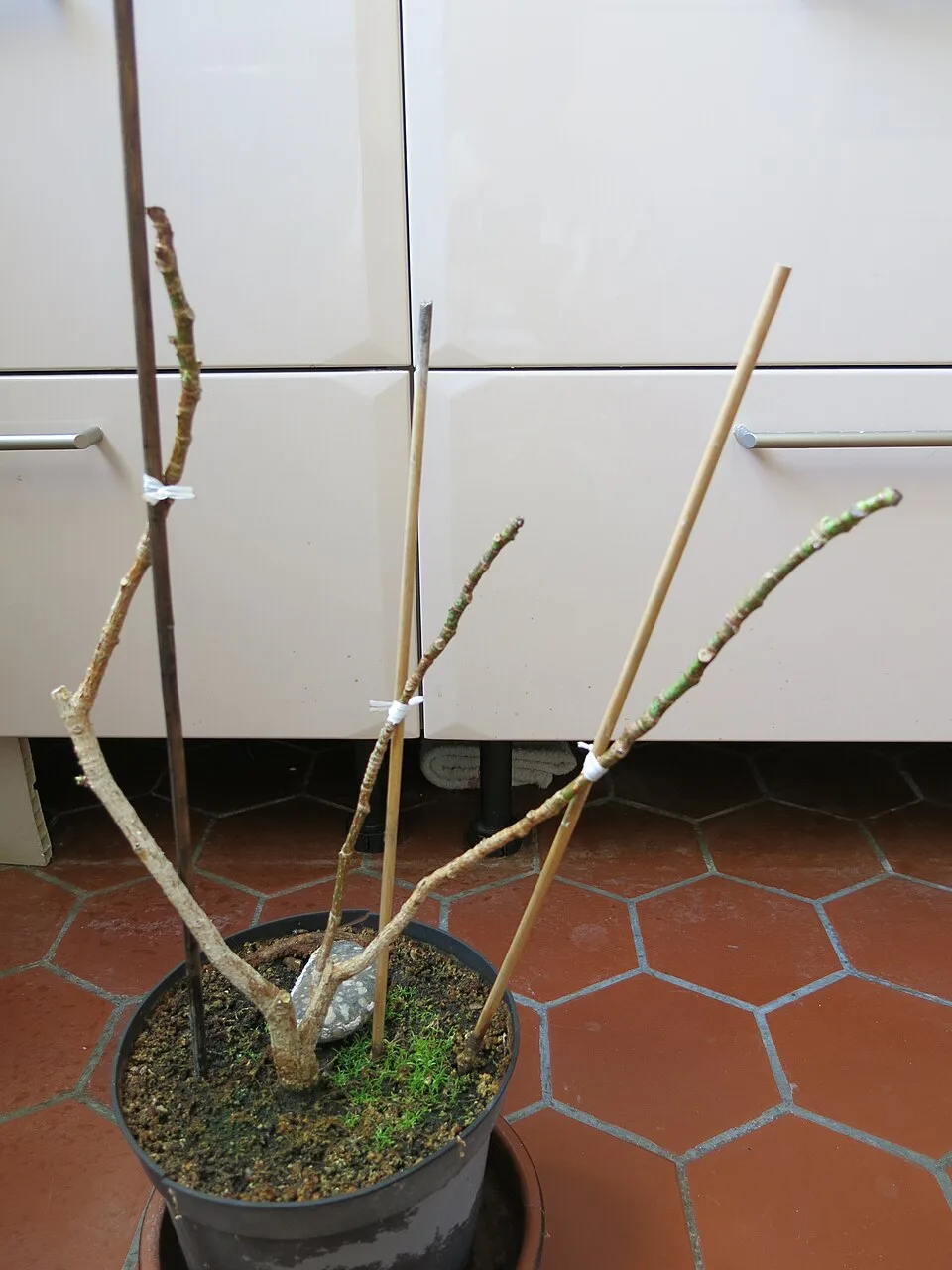
A few older leaves dropping while fresh growth appears can be a normal turnover. A plant losing leaves rapidly, especially after a move, needs a closer look. The leafless potted ficus in the photo is an example of substantial leaf loss; the photograph does not establish what caused it.
Start with the timeline
Write down when the leaves started falling and what happened just before: a new window, a trip outdoors or back inside, a colder night, a heat vent, repotting, or a change in watering. Maryland Extension notes that a houseplant moved from brighter outdoor light into a home may shed leaves while adjusting; weeping figs can be especially conspicuous.
Look at the fallen leaves. Were they older and yellow, green and newly formed, dry and crisp, or soft? That pattern is a clue, but no one leaf color proves a cause. Take a photo of the whole plant and pot so you can compare changes over a week.
Check light, temperature, and roots
Move a plant away from a heating or cooling vent or cold glass if it is exposed to a draft. Maryland Extension's indoor climate guide lists temperature extremes among causes of foliage damage and leaf drop. Give the species suitable light, and avoid moving it back and forth every day.
Test the mix below the surface and check the drainage hole and saucer. Maryland Extension recommends watering to the plant's needs instead of a fixed schedule. A wet pot with wilting or yellowing leaves calls for a root check; a very dry pot may need gradual rewetting. Read our too wet or too dry guide before changing the watering routine.
Inspect for pests and watch recovery
Check leaf undersides and stems for insects, sticky residue, or fine webbing. Maryland Extension's diagnostic table lists several pests and root problems that can accompany declining foliage. If pests are visible, identify them first and separate the plant from its neighbors.
Correct the strongest likely cause, then watch whether new leaves stay healthy. Fallen leaves will not reattach. If leaf loss continues quickly, stems become soft, or several plants are affected, bring the plant and your care notes to a local extension clinic. A photo of fallen leaves alone cannot distinguish adjustment from damaged roots.