
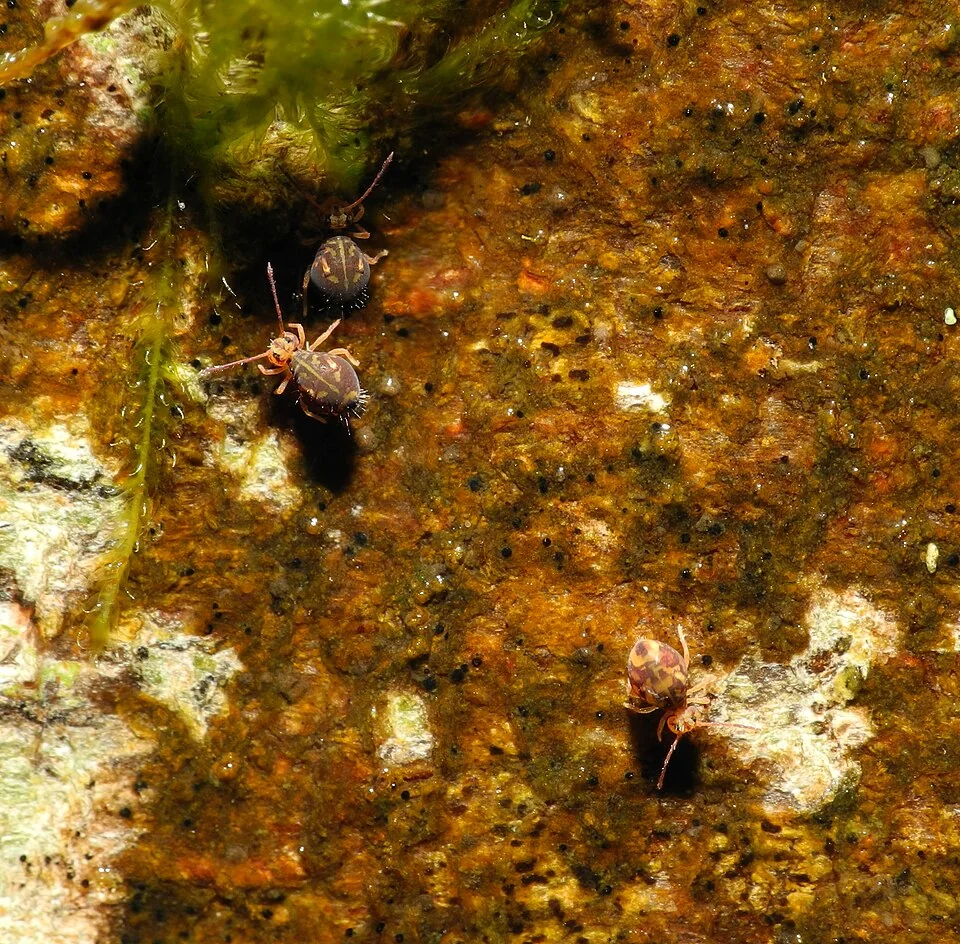
Water a pot and tiny pale specks hop across the surface. They may be springtails, small soil-dwelling animals that prefer damp organic matter. The photograph shows springtails at high magnification on a wet surface, not inside a houseplant pot; the movement and location of bugs in your own pot matter more than a close-up resemblance.
How can you recognize springtails?
Minnesota Extension describes springtails as very small, often white or gray, and likely to jump when disturbed. Look for them on the surface of moist mix, around drainage holes, or beneath a pot soon after watering. They do not have wings.
If the insects fly around the pot or a window, check our fungus gnat guide instead. Tiny moving dots on a leaf may be a different pest entirely. A photograph cannot confirm springtails unless it shows enough detail; watching whether they jump is often the better first check.
Are they hurting the plant?
Usually not. Minnesota Extension says springtails feed on fungi and decaying material and rarely damage established indoor plants. Their presence can be a clue that the potting mix stays moist, though it does not prove the plant has root rot. Judge the plant separately: inspect growth, drainage, and moisture below the surface.
A declining plant may have a watering or root problem even when the springtails themselves are harmless. If leaves wilt while the mix remains soggy, investigate the roots rather than blaming every insect you see.
What should you do about them?
Let the mix surface dry as far as the plant tolerates between waterings, and empty standing water from the saucer. Minnesota Extension's springtail guidance favors moisture control over pesticides indoors. Do not deliberately dry a moisture-loving plant until it wilts; use its species and the depth of the mix to decide when to water. Remove dead leaves from the pot surface and check that drainage holes work.
Avoid spraying the room or pot just because you see springtails. If you still have heavy numbers after correcting persistent dampness, or you see clear feeding damage on tender seedlings, ask a local extension service to identify a sample. Similar-looking tiny animals can require different care.