
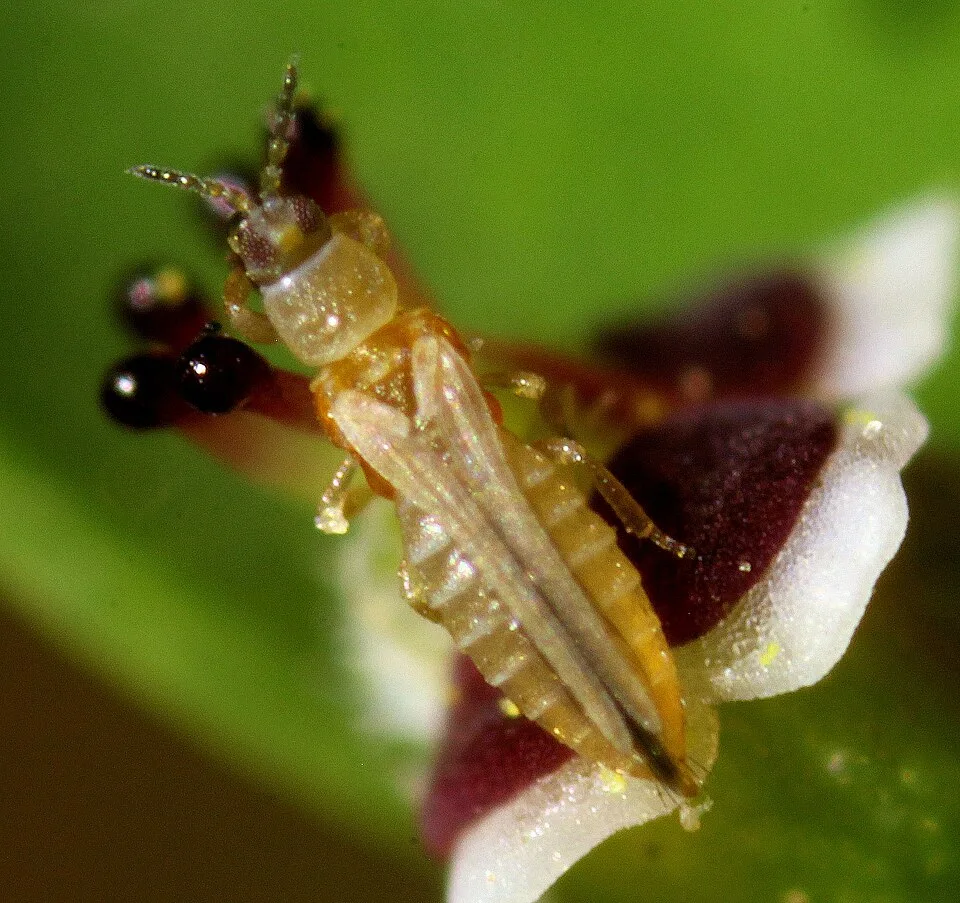
Thrips are tiny insects that can leave irregular, silvery marks on leaves or flowers. Other problems can also discolor foliage, so look for the insects as well as the pattern of damage. The photograph above is a highly magnified thrips on a flower; the insect on your plant will appear much smaller.
How can you tell whether it is thrips?
Minnesota Extension describes thrips as slender, fast-moving insects, often tan or dark. Examine tender new growth, flowers, and the undersides of marked leaves with a magnifier. Look for irregular silvery streaks and small dark specks of waste, rather than assuming a single brown spot is diagnostic.
Gently tap a suspect flower or leaf over white paper and watch for moving insects. A sticky card can help monitor flying adults, but a card alone does not tell you which plant is infested or remove insects on the foliage. Compare the damaged and undamaged parts of the plant; old scars remain even after pests are gone.
What should you do first?
Move the affected plant away from the rest of your collection. Maryland Extension's thrips guidance recommends starting with integrated pest management: confirm the pest, then reduce it with practical measures before considering pesticides. Remove badly affected flowers or leaves if the plant can tolerate pruning. Rinse accessible foliage with plain water, including undersides, without soaking a species that dislikes wet leaves.
Check neighboring plants and repeat inspections. Thrips can occupy sheltered places, and a single rinse may miss them. If the infestation remains heavy, consider whether keeping a badly damaged plant is worth exposing nearby plants.
If you choose a treatment
Use only a product labeled for the pest, the plant, and indoor use in your location. Follow the label's application and repeat instructions. Minnesota Extension cautions against homemade soap mixtures, which can burn leaves. Do not apply a pesticide to a drought-stressed plant.
If you cannot find a moving insect, keep observing before treating. Spider mites, light stress, and leaf spots call for different checks. A photograph of a silver patch cannot confirm thrips or show whether insects are still present.