
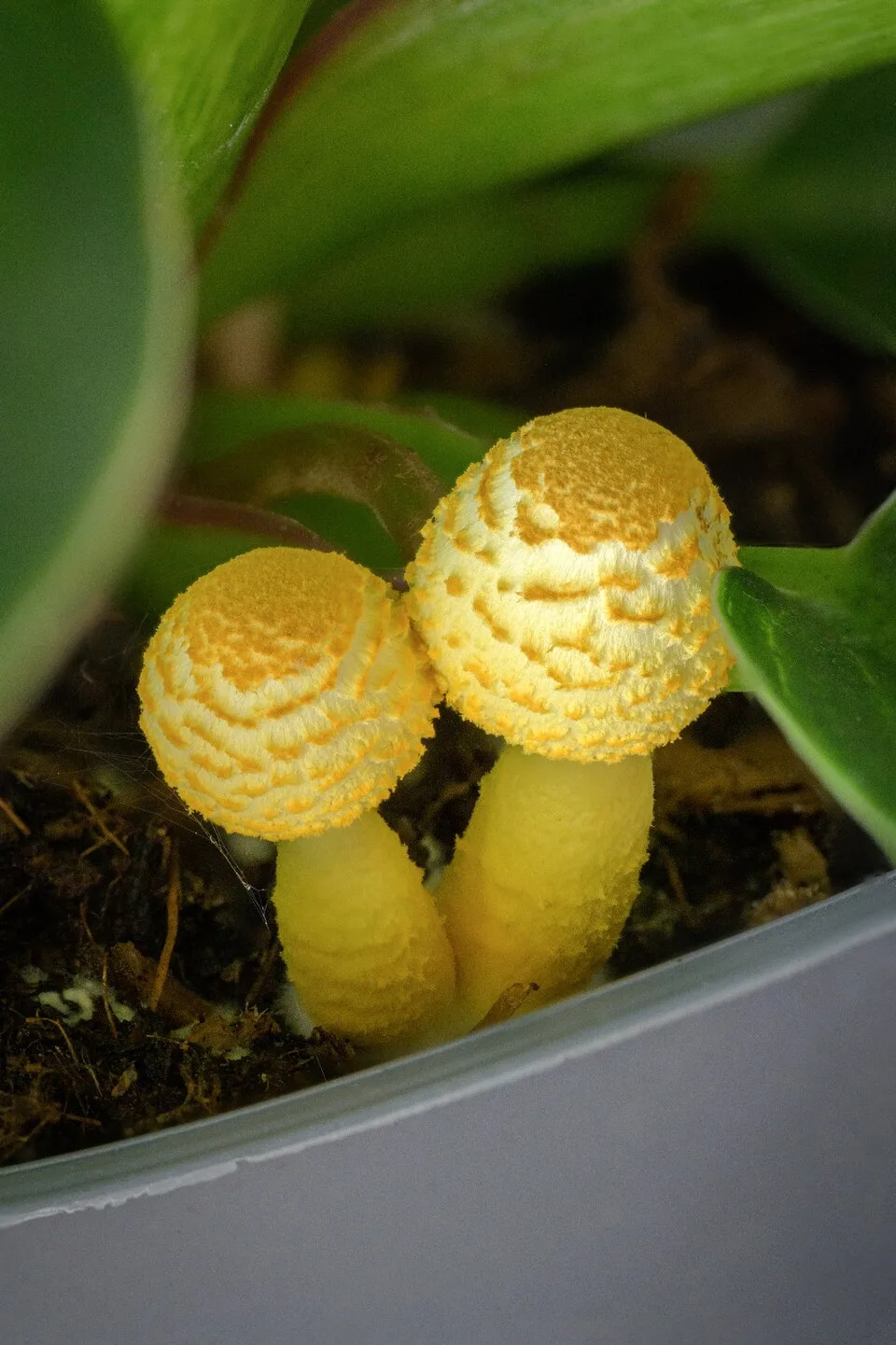
A white layer on potting soil is not automatically mold. Mineral salts from water and fertilizer can leave pale, crusty deposits as water evaporates. Fuzzy growth is a different observation, and appearance alone cannot identify everything living in a pot.
Check texture and location
Look at the soil surface, drainage holes, and pot rim. A dry, crystalline coating suggests a deposit; soft, threadlike growth suggests fungal growth. Avoid stirring up an unknown coating just to inspect it. Take a close photograph and note whether the mix has stayed wet.
Maryland Extension describes white crystallized coatings on foliage and crusts on growing media or containers as signs of mineral and fertilizer salt deposits. The coating is a clue to the plant's water and feeding history, rather than a diagnosis of root damage.
Review water and fertilizer together
Write down how often you feed, the dilution used, and whether the potting mix contains fertilizer already. Check whether water can leave the pot and whether runoff collects inside a decorative cover pot.
A little surface residue does not prove fertilizer toxicity. If the plant also has brown leaf tips, consider salts alongside uneven watering, humidity, and root problems. Do not add fertilizer to treat the crust.
What can you do about salt buildup?
First correct blocked drainage or standing water. Maryland Extension's guidance describes leaching soluble salts with water, but this requires a container that drains freely. Do not repeatedly flood a plant in a sealed pot or keep already waterlogged roots wet in an attempt to clean the surface.
For a declining plant, check the condition of the roots and growing mix before choosing between leaching and repotting. Use the root rot guide if there is persistent wetness, wilting, or soft tissue. Scraping away a crust alone does not address the conditions that produced it.
What if the white material is fuzzy?
Review moisture and drainage, remove decaying debris, and check the plant's watering needs. Fungal growth in growing media does not by itself establish that the plant is infected. Our guide to mushrooms in houseplant soil explains why fungi can appear in potting mix.
Avoid applying a fungicide solely because the surface looks white. If growth spreads, the plant declines, or you cannot distinguish a deposit from living growth, a local plant clinic can examine a sample more closely than a photograph allows.