
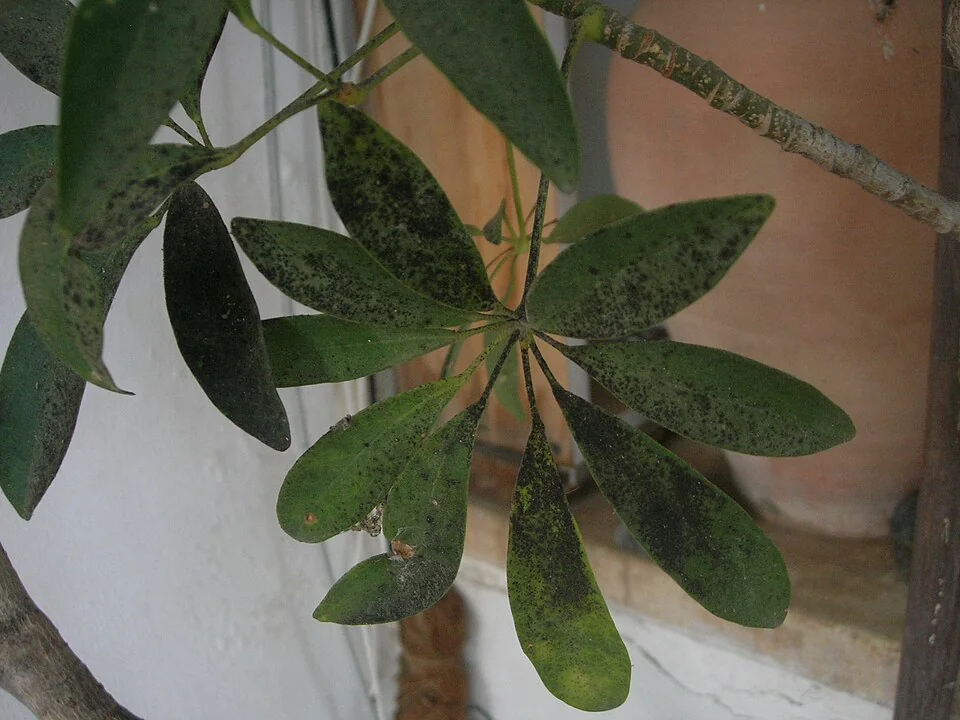
If a houseplant's leaves, windowsill, or floor feel sticky, first look above the residue. Sap-feeding insects can leave sugary honeydew that falls onto lower leaves and nearby surfaces. The photograph shows dark sooty mold on a Schefflera leaf; it illustrates one possible result of honeydew, not proof that every sticky plant has the same pest.
What leaves honeydew behind?
Maryland Extension explains that several sap-feeding insects produce honeydew. Search leaf undersides, veins, young stems, and joints for soft scale, aphids, mealybugs, or whiteflies. On a tall plant, the pest may sit well above the sticky leaf.
Look for movement, attached bumps, cottony clusters, or insects that flutter when disturbed. A phone photo of a glossy leaf cannot identify the source. Check several parts of the plant with good light before choosing a treatment.
Why are there black marks too?
A black, soot-like coating may be sooty mold growing on honeydew. Maryland Extension says the mold itself does not infect the plant, though a heavy coating can shade leaves. Gently wipe an accessible patch with a damp cloth to see whether it lifts. Treating the coating alone will not stop new honeydew if insects are still feeding.
Not every dark spot is sooty mold. Spots embedded in the leaf, spreading lesions, or soft tissue need a different check; see the leaf spot guide. The pictured Schefflera is a visual example of the black coating, not a diagnosis for another plant.
What if you cannot find insects?
Recheck after a few days, especially new growth and hidden leaf joints. The RHS notes that some houseplants can produce sticky secretions under particular growing conditions. A few droplets at leaf edges after watering are different from a widespread tacky film. Note when the residue appears, whether it is on the plant or surfaces below, and whether it keeps returning.
Once you have identified a pest, follow the guide for that insect and check neighboring plants. Wash residue gently from sturdy leaves, then monitor for fresh stickiness. If it returns but no cause is visible, a local extension plant clinic can examine a sample before you apply a spray.